


Achieving Balance in Optical Design and Stable Production for Channel Illumination Lenses

Last Updated on February 2, 2026
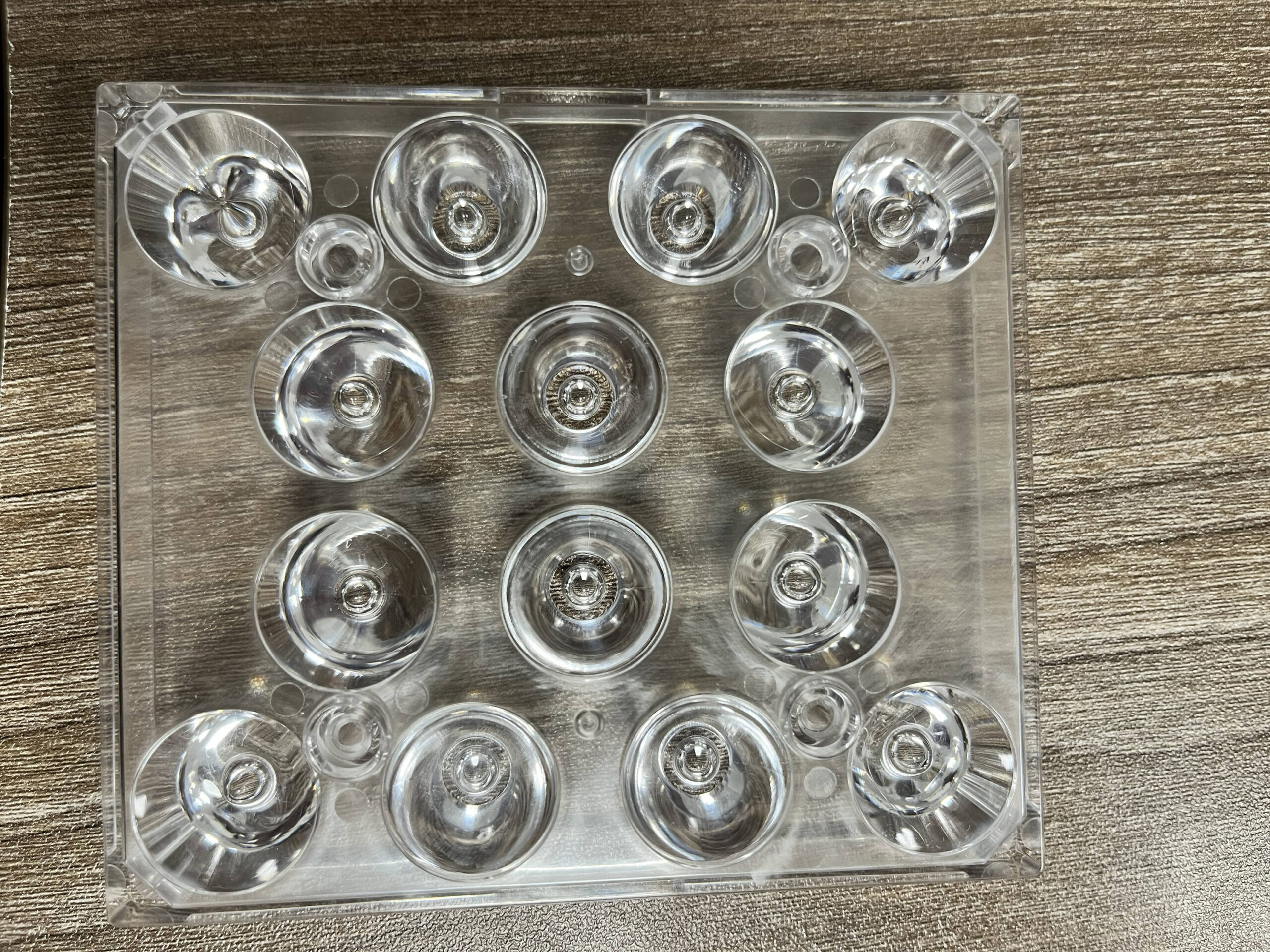
In modern architecture and public spaces, lighting in passageways, corridors, and stairwells goes far beyond simply “illuminating”. It plays an indispensable role in safety guidance, visual comfort, and even in creating a unique atmosphere. A high-quality LED lens is the optical core that achieves uniform light distribution, eliminates glare, and ensures wide-range uniform illumination. However, when perfect optical design encounters mass production bottlenecks, all ideas may remain just blueprints.
I. Precise Positioning: Core Scenarios and Optical Requirements
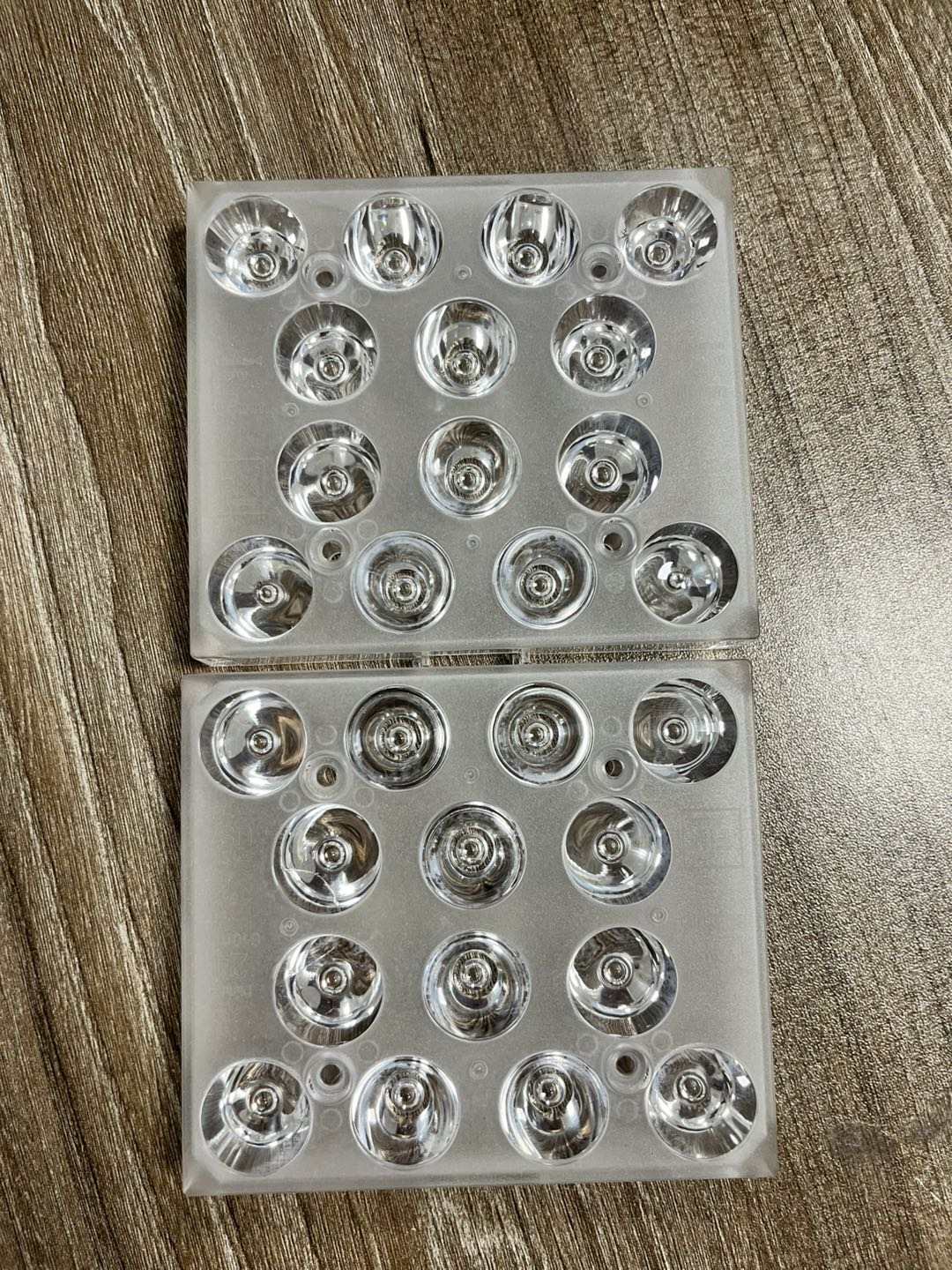
Our focus this time is on corridor and passageway lighting lenses, also known as guide light lenses. They primarily serve the following three scenarios with stringent light quality requirements:
Safety-Required Scenarios: Such as fire exits and emergency lighting, requiring clear, dark areas to ensure absolute safety in emergencies.
Commercial Public Spaces: Lighting in shopping malls, hotel corridors, or stairwells, requiring uniform, soft light to avoid discomfort caused by strong contrasts or glare.
Special atmospheres: Indirect lighting and guide lights in casinos and high-end entertainment venues, while meeting basic lighting requirements, prioritize the visual aesthetics of light refraction and a smooth, natural transition.
These application scenarios collectively highlight several core optical selling points of the lens:
- Multi-angle light intensity distribution: Achieving a wide beam coverage range.
- Uniform illuminance and smooth transition: Ensuring smooth light on the ground or walls, without abrupt light spots or breaks.
- Wide viewing angle and anti-glare design: Comfortable viewing from multiple angles, avoiding glare.
II. Project Background: The Client’s Dilemma and Needs
The client we encountered possessed a professional team of senior optical engineers. They had independently completed the optical design, with clear and mature requirements for optical angle, light pattern, and uniformity. However, the project stalled during the mass production phase.
Previously, this client had commissioned another Chinese injection mold factory to develop and produce optical molds, but the mold quality was substandard, leading to frequent lens defects during trial and mass production. This essentially meant the previous mold development failed, repeatedly hindering the client’s mass production plans.
When the client contacted us, burdened by past difficulties and their existing design, their needs were exceptionally clear and firm: to maintain 100% of the original optical design and create a mold capable of reliably mass-producing lenses. The client’s advanced communication was taken very seriously by our optical and mold engineers, who discussed and adjusted the mold structure design according to the client’s needs, focusing on the tonnage of their injection molding machine and process conditions to design a matching mold.
III. Core Challenges: Thick-Walled, Straight-Walled Lenses Meet Mass Production Stability
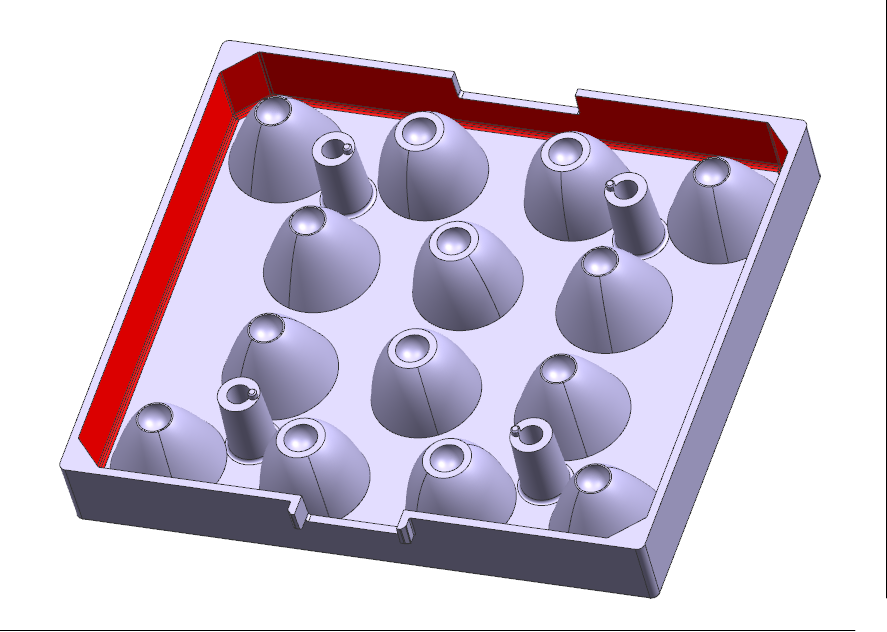
After a thorough evaluation of the customer’s optical design, we quickly identified the fundamental challenge for mass production: the lens is a thick-walled component with highly vertical sidewalls and extremely small draft angles. This structure results in an immense clamping force between the product and the mold cavity after plastic injection molding, making it highly susceptible to mold pull (scratching the product surface) or even jamming during ejection, leading to extremely low yield rates and disrupted production. This was precisely the persistent problem that previous suppliers had failed to resolve in their two attempts.
The customer’s anxiety lay in this: the optical design could not be changed, but the existing structure was inherently difficult to manufacture. How to resolve this contradiction?
IV. Breakthrough Strategy: From Collaborative Design to Systematic Optimization
Faced with this challenge, we didn’t simply “process according to the drawings,” but instead initiated a systematic engineering solution process:
1. Working Back from “Mass Production Feasibility” to Determine Mold Structure
While fully respecting the client’s optical design, our team first examined it from a mass production perspective, focusing on assessing the potential risks to demolding posed by lens thickness and sidewall perpendicularity.
We identified several “red areas” with extremely high demolding risks in the original design and identified them as key targets for mold structure optimization.
2. In-Depth Joint Review of Optical and Mold Engineering
This wasn’t a simple handover, but a synchronized collaboration between optical and mold engineers. Both sides sat together at the review table, with the core principle being: while absolutely ensuring that the light pattern and light distribution performance remained unchanged, to find all possible fine-tuning space to improve manufacturability.
We conducted multiple rounds of joint reviews and simulation analyses of the parting line position, ejector system layout, cooling water channel design, and runner scheme to ensure that every adjustment served stable demolding and uniform shrinkage without interfering with the light path.
3. Targeted Optimization for Thick-Walled and Straight-Walled Molds
Addressing the core pain point of mold pull, we conducted two rounds of precise mold structure optimization:
First Optimization: Within the limits allowed by the optical surface, we fine-tuned the draft angle of the sidewalls in non-critical areas and optimized the distribution and number of ejector pins to ensure uniform ejection force.
Second Optimization: We further improved the surface treatment process of key areas of the mold cavity, reduced the coefficient of friction, and finely adjusted the ejection speed and stroke. After these two iterations, the mold pull problem was completely solved, resulting in smooth and error-free ejection.
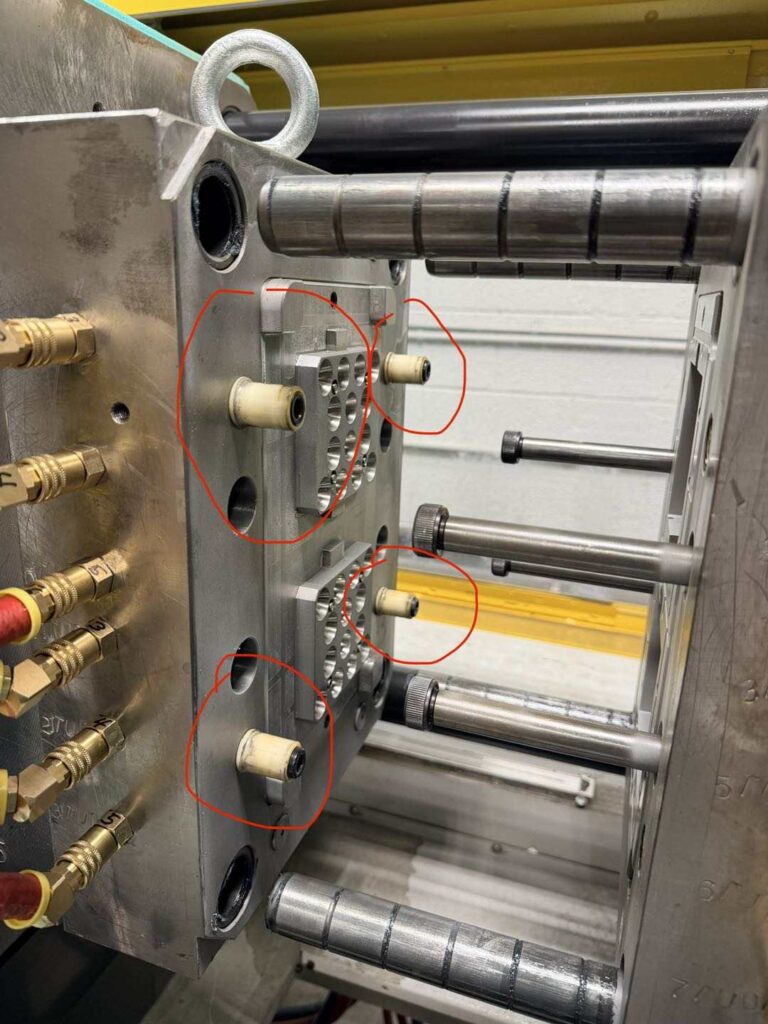
injection molding machine
4. Customized Delivery Based on Customer Production Conditions
Based on the specific tonnage of the customer’s injection molding machine and the characteristics of its commonly used materials, we tailored the mold’s rigidity and cooling solutions to ensure that the mold could immediately adapt to the production environment after installation, avoiding any “acclimatization issues”.
More importantly, when delivering the mold, we simultaneously provided a detailed reference for mass production injection molding parameters, including recommended injection temperature, pressure, holding time, and cooling cycle. This is equivalent to giving customers a “key to start correctly,” which greatly shortens the trial production and break-in period and reduces the cost of trial and error.
V. From Delivery to Mass Production: A Seamless Success
The entire project implementation process was a rigorous engineering workflow:
1. Requirements Freeze and Solution Confirmation: Deeply aligned all technical requirements and historical pain points with the client.
2. Collaborative Design and Review: The optics and mold teams worked simultaneously to ensure the design was manufacturable and mass-producible.
3. Mold Fabrication and Process Inspection: During precision machining, key surfaces were continuously inspected against the optical drawings.
4. Systematic Mold Trial and Parameter Consolidation: Optimal process windows were recorded and compiled into a delivery package.5. Delivery and Rapid Mass Production: After the molds arrived at the client’s factory, based on the parameters we provided, the client quickly completed trial production and smoothly entered the stable production stage.
VI. Customer Feedback: Trust After Problem Solving
The customer’s feedback was direct and positive:
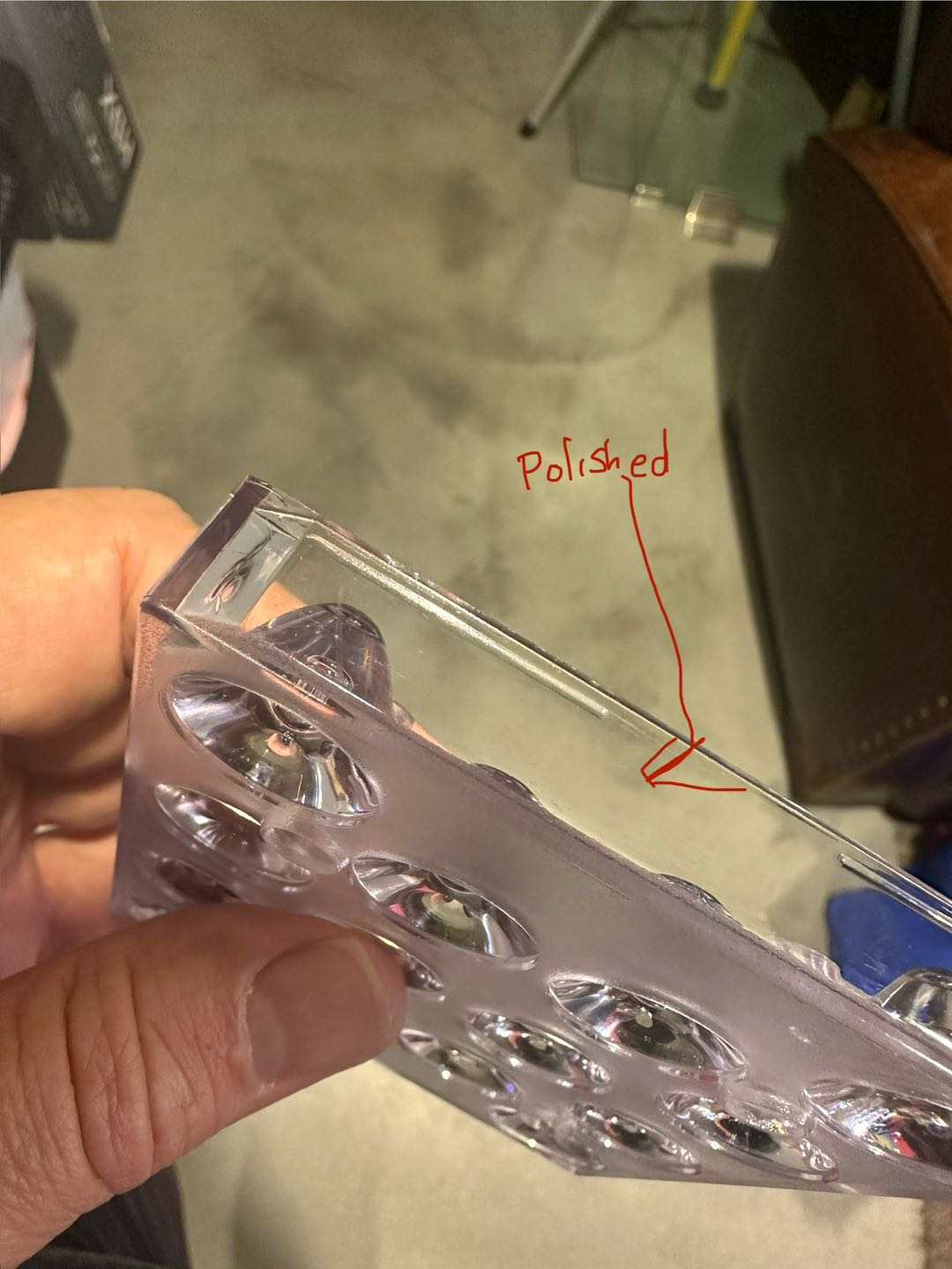
“From mold design to production completion, the Hongzhu team made us very excited and happy because they truly solved the problem that our previous suppliers couldn’t handle. The optical effect of the sample perfectly met our expectations. Production went very smoothly after receiving the mold. The injection molding parameter references you provided were a great help. We found a stable window on the first trial production run—the efficiency was incredible!”
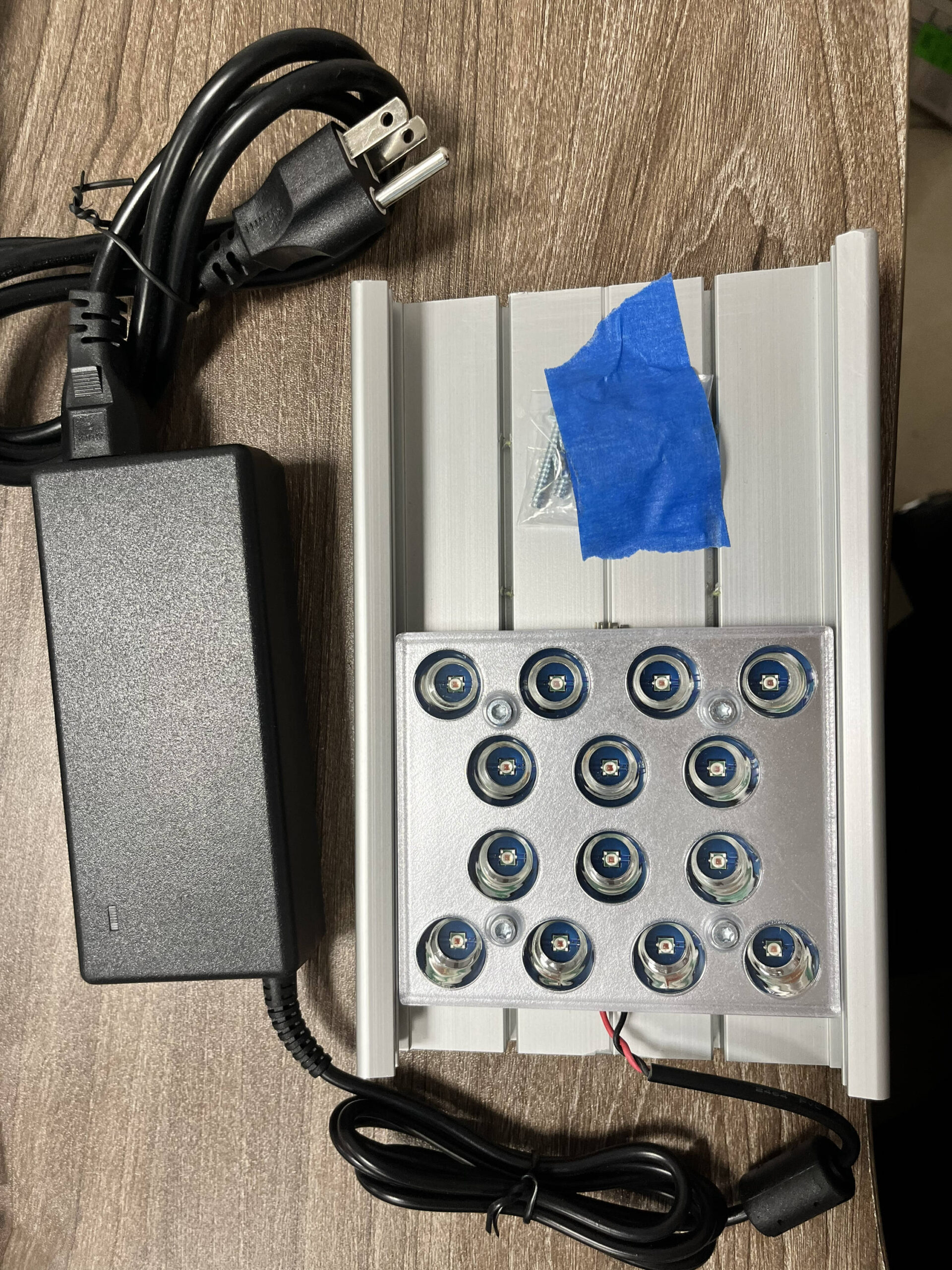
VII. Project Summary: The Deep Logic Behind Success
The success of this case allows us to extract the core methodology for the mass production of optical components:
- The success of a lens depends half on optical design and the other half on mold and mass production design. Both must be considered holistically from the outset.
- Foresight is more important than remediation. It is essential to anticipate potential problems such as mold pulling, deformation, and shrinkage that may arise during mass production due to structures like thick walls, straight walls, and thin ribs, and to mitigate these issues during the mold design phase.
- Delivering a solution, not just a mold. Delivering the mold along with a validated process parameter package is key to ensuring customers quickly achieve stable mass production and create value.
In the lighting industry, excellent optical design is the starting point, while reliable mass production capability is the endpoint of value realization. Hung Chu is committed to becoming a solid bridge connecting these two ends. With our deep synergy between optics and molds, as well as our forward-looking control over mass production processes, we ensure that every customer’s perfect design can be seamlessly and efficiently mass-produced.



It’s interesting to think about how even the most carefully designed optical solutions can run into production limitations. The balance between quality design and scalable production seems like a delicate process, especially for critical lighting like emergency lighting.